
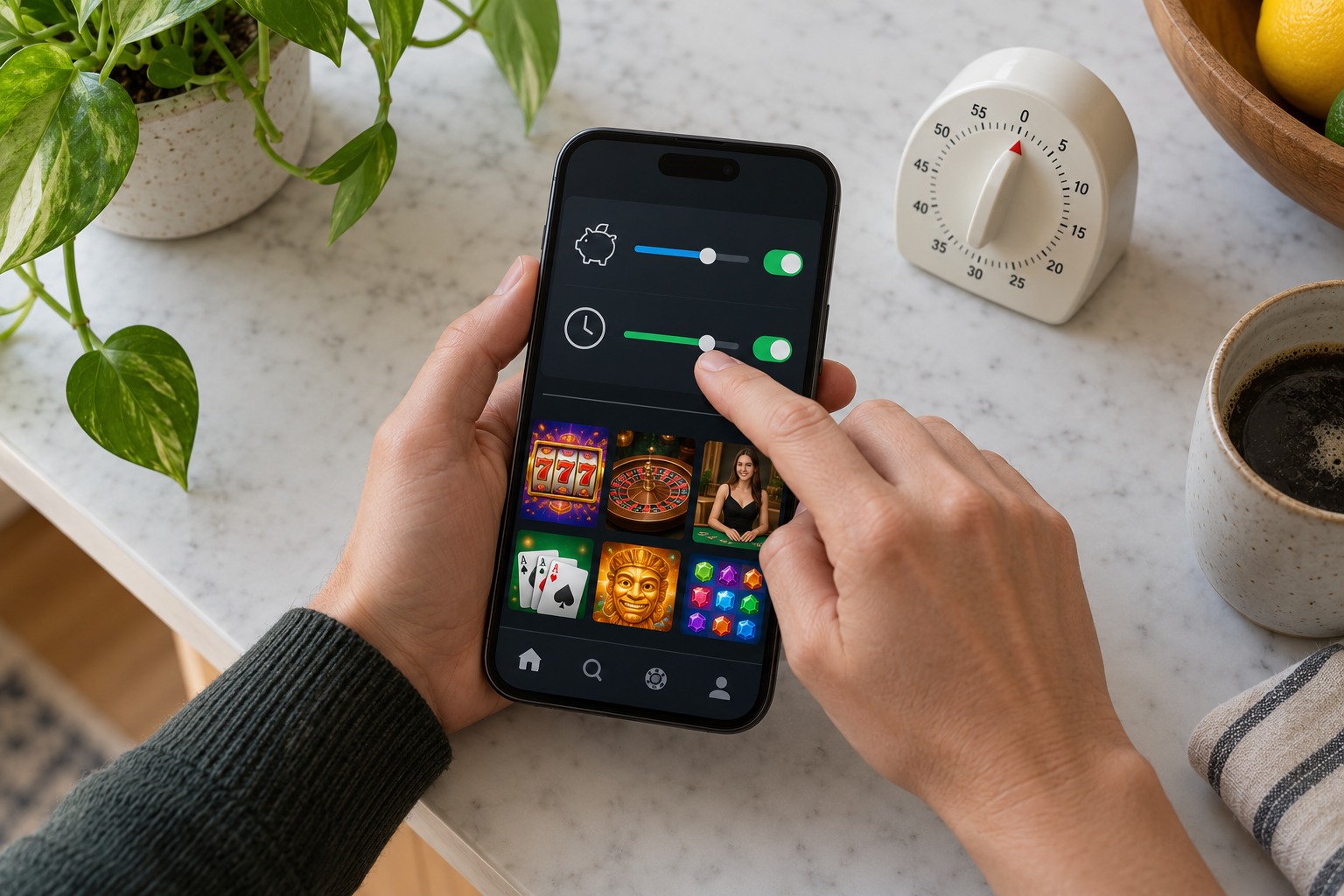
Three controls, three different boundaries
| Control | What it measures | Question to ask before setting it |
|---|---|---|
| Deposit limit | Money added to the gambling account during a set period. | How much could leave my bank account without affecting bills or savings- |
| Spend limit | Money staked, bet or paid into games; under the New Zealand regulations, the definition includes previous winnings reused for gambling. | How much total play am I willing to fund during the period, including recycled winnings- |
| Time limit | Duration of play on the platform. | How long will I allow a session to run before the account stops or prompts me- |
| Break-in-play or time-out | A planned pause or temporary block that interrupts access. | What pause would help me step away before making another decision- |
New Zealand’s online casino rules
The Online Casino Gambling Regulations 2026 require covered operators to offer daily, weekly or monthly limits on gambling time, deposits and spend. Customers must be prompted about setting limits when an account is created and, for limits they have not set, monthly. The platform must enforce a request to increase or remove a limit only after at least 24 hours.
The DIA’s 2026 Minimum Standards require the setting functions to be easy to access after account opening, including from deposit screens. They require a free-text option for setting limits and apply the lowest limit when a customer sets overlapping periods. These protections apply to platforms covered by the new statutory framework; check the operator’s status during the transition.
The rules also cover breaks-in-play, time-outs and pop-up alerts. A covered platform must let a customer set their duration and frequency; changes that weaken those protections have a 24-hour delay. Check the current status of the operator and the settings available in the account before relying on a particular feature.
For covered platforms, the regulations require a break of at least five minutes after 60 minutes of continuous play, offered at an appropriate point in the game round. This minimum creates a pause where a session could otherwise move directly from one stake to the next.
The DIA minimum standards and the Online Casino Gambling Regulations 2026 set out the formal requirements.
Set a limit from money already available
Work from take-home money after rent or mortgage payments, food, transport, debt repayments, childcare, utilities and savings commitments. The amount left after those costs is not automatically safe to gamble; choose only a portion you could lose without using credit, missing a bill or asking another person to cover essentials. If the budget is already under pressure, a zero gambling limit is a valid boundary.
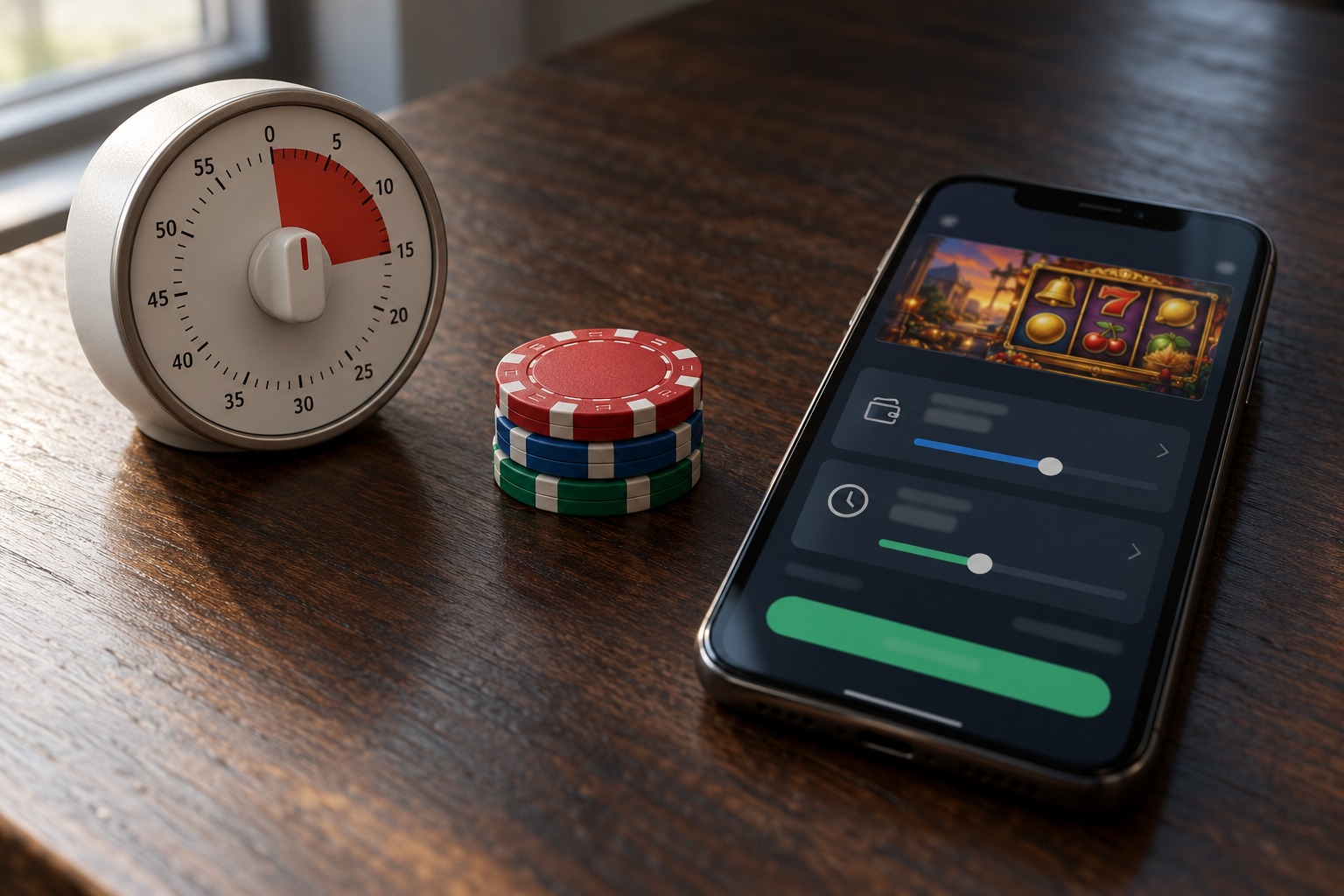
Pick the period that matches your pay cycle and account activity. A weekly limit can be easier to compare with weekly income and routine expenses; a monthly limit makes recurring transfers visible. A daily cap can stop one session from consuming the entire allowance, but it needs a wider weekly or monthly boundary too.
Set both a deposit and spend cap when available. If a person deposits $40, wins $25 and reuses the winnings, a deposit counter will show $40 even when total stakes are higher. A spend control is designed to capture money wagered, including previous winnings used again. Keeping the two numbers distinct shows whether the concern is cash leaving the bank or repeated play within the account.
Example: make the measurement explicit
Starting point: a person decides that $60 is the most they can afford to deposit over a week, and that play should stop after 90 minutes in any session.
Account settings: a weekly deposit limit of $60, a weekly spend limit chosen separately, a 90-minute session limit and a 15-minute break reminder.
Check before use: the site explains when the week resets, whether the limit applies to each platform, what counts as spend and when a change takes effect.
The numbers are illustrative, not a recommended budget. A weekly deposit limit should never be set by matching a bonus minimum or a casino’s suggested amount. A limit is useful only if it reflects the player’s own finances and remains independent of the operator’s promotions.
When daily and weekly controls are both active, the lower available allowance should govern. A platform that displays separate counters without explaining which one blocks play leaves the customer to infer a rule at the moment it matters.
Confirm what the limit does across products
A limit may apply to one gambling platform, not to every casino or betting account in a company group. It may not include a different brand, a sports betting account, a land-based venue or another payment route. Read the settings page and ask how linked accounts are counted before treating a limit as a single New Zealand-wide cap.
Under the new standards, limits are offered on each platform an operator operates. A customer should check whether a group’s brands share one account or separate accounts. If several independent sites are used, track them together outside the platforms; each local limit could be honoured while combined spending exceeds the amount the person intended.
A bank can add another boundary by setting a card spending limit or blocking a merchant when that option is available. These measures may not cover every payment type and can require a separate request to the bank. They complement account limits; they do not replace a time-out or self-exclusion when access itself needs to stop.
Know what happens when a limit is reached
Read whether the platform blocks additional deposits, prevents new stakes, pauses a session or merely displays a warning. Check the reset time and time zone. A “daily” limit that resets at midnight in another country may not match the player’s local day. Save the rules beside the selected amount.
A request to raise or remove a limit should not take effect immediately under the new New Zealand rules for covered operators; at least 24 hours must pass. That cooling period protects a boundary from a quick change made during play. A customer can request a lower limit without waiting for the increase delay to expire.
If a limit appears to fail, stop using the account and save the settings screen, balance, time and transaction history. Contact the operator through the verified support route and ask for the applicable limit rule in writing. If more money left the bank than the limit allowed, contact the bank promptly and preserve the operator’s response.
Use time controls to interrupt momentum
Time can become difficult to estimate when rounds are short, a screen is full-screen or the next play starts immediately. Keep a clock visible and choose a reminder before the session begins. A break-in-play can create a pause between rounds; a time-out blocks access for a longer period. A pop-up can show elapsed time or account activity, but it works only if the player stops to read it.
New Zealand’s minimum standards require covered platforms to keep the passage of time visible, including in full-screen applications that obscure the device clock. The regulations require access to breaks, time-outs and alerts, with at least a 24-hour delay for certain requests that weaken the setting.
Choose a pause long enough to leave the screen, move rooms or do something unrelated. A reminder that appears while a round is active can be dismissed automatically; select a setting that creates a deliberate break and check whether the next stake is blocked until the interval ends.
Boundary drift: signs a limit needs stronger support
- Raising a limit after a loss or just before a bonus expires.
- Using another account or a different payment method after reaching a cap.
- Moving bill money, savings or borrowed funds into a gambling account.
- Extending a session because a withdrawal is pending or a win feels close.
- Turning off reminders without reading the balance or time shown.
- Hiding account activity from someone who shares household finances.
These patterns call for a break and stronger access controls, not a larger allowance. A time-out or self-exclusion can reduce immediate access; the Gambling Helpline can discuss support options in New Zealand, including for family members concerned about someone’s play.
A short setup record
- My deposit cap
- Amount and period, with any linked accounts included.
- My spend cap
- Total stakes allowed, including previous winnings reused.
- My session boundary
- Elapsed time, break interval and what blocks the next round.
- Change delay
- How long an increase or removal request must wait.
- Reach beyond the casino
- Bank alerts, spending controls or a separate time-out that can interrupt access.
- Records
- Saved settings, terms, transaction history and support case number if a feature fails.
Keep the record outside the gambling app. An account balance is not a budget, and a platform counter may cover only one part of a person’s activity.