

What New Zealand’s online rules require
The Online Casino Gambling Regulations 2026 require covered platforms to let a customer exclude themselves from that platform, choose an exclusion period including an indefinite period, and use a process that is easy to find and complete. Once set, the customer cannot shorten the exclusion period. The operator must apply the exclusion without undue delay and no later than 24 hours after the request.
During the exclusion, the operator may contact the excluded customer only when the contact is needed to meet a legal obligation. After the period ends, a return requires a deliberate decision: the customer accesses the account, acknowledges the gambling help services available and confirms they want to participate again. A further 24 hours must pass before gambling can resume.
These requirements apply to covered platforms. During the licensing transition, check the specific operator’s status in the DIA player information before assuming the statutory process covers every offshore site accessible to New Zealand customers.
The regulations describe the exclusion and return conditions; the DIA publishes the implementation overview.
Choose a period that protects the decision
Think about the interval the block needs to cover. A fixed end date set before a break starts can land on a known trigger: payday, a holiday or a major event. Choosing a longer period moves the return decision past that point; an indefinite period leaves the date open.
Do not pick a short interval to preserve a bonus, loyalty tier or upcoming event. Those benefits are controlled by the operator; the exclusion is meant to protect the person’s boundary. Check the terms for how the period is counted, whether it begins at the request or after verification, and how the platform confirms that access has been blocked.
Save the confirmation, start date, selected duration, account name and support case number. If the platform does not confirm the block, do not keep testing access by opening games. Contact the operator through its verified support route and ask for written confirmation of the exclusion status.
Check what the block covers
The statutory customer self-exclusion rule refers to gambling on the platform. A casino group may operate more than one brand, website or app, and a separate company may offer sports betting or another casino. Do not assume that a request on one domain automatically blocks every product or brand.
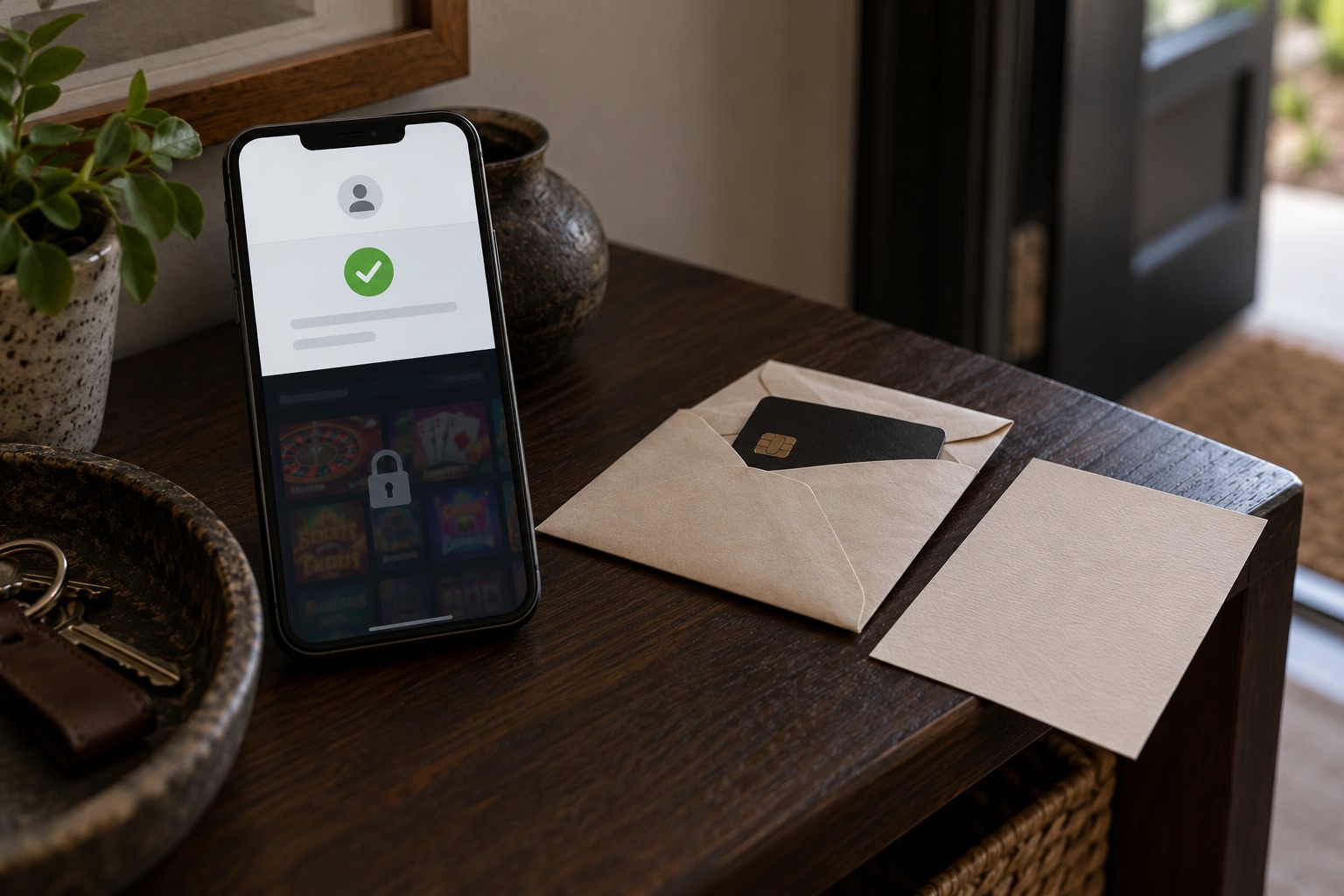
Ask the operator whether the exclusion applies to the account, the named platform, related brands or all gambling products it operates. Keep the answer. If other sites or apps are part of the pattern, set separate exclusions there and add practical access barriers on the devices used to reach them.
One operator can share a casino login across two brands and keep separate terms for its sports account. A group name alone does not show which products are blocked. Ask for the covered domains and products in writing, and keep a separate confirmation for every request.
The regulations also describe a separate operator-led process. If the operator provides information and tools but reasonable grounds remain to believe the customer is a problem gambler, it must exclude the customer from all gambling platforms it operates. That process differs from a customer choosing a platform self-exclusion; check the notice to see which rule applies.
Self-exclusion is more effective with fewer routes back
Digital access
- Remove casino apps and saved login details.
- Sign out on browsers, tablets and shared devices.
- Use device or network blocking tools where available.
Money access
- Remove stored payment methods from gambling accounts.
- Ask the bank whether card controls or gambling merchant blocks are available.
- Keep household money and gambling account records separate.
People and support
- Tell a trusted person what boundary is in place.
- Ask someone to help keep the confirmation and account details.
- Use confidential gambling support to plan the next step.
These steps do not replace the operator’s exclusion system. They reduce the chance that a second website, saved password or alternative payment method makes it easy to bypass one platform’s block.
What happens to money in the account-
Self-exclusion blocks participation; it does not automatically explain how an operator will handle a pending withdrawal, uncommitted balance or promotional credit. Read the account terms and ask how uncommitted funds can be withdrawn, whether identity verification is required and which payment route will be used.
If a withdrawal remains open, ask how to access its status or answer a verification request without restoring permission to gamble. The operator should distinguish payment access from play access in its reply; keep that case reference separate from the exclusion confirmation.
New Zealand’s online casino regulations give customers the ability to request account closure and withdrawal of uncommitted funds from a covered operator. The platform may need to confirm identity and payment ownership before returning funds. A request to release a balance should not require a separate deposit to a staff member or private wallet.
If the account includes a bonus, the rules may distinguish bonus credit from cash or winnings. Save the balance screen and terms before the account closes. Do not accept a reactivation offer or play prompt to “clear” a balance while an exclusion is active; ask support for the written closure and withdrawal steps.
Returning after the exclusion period
A closing date and a return request are separate events. Before access resumes, consider what led to the exclusion, whether other support or account boundaries should stay in place, and whether the person wants the account back at all. The operator’s confirmation should state how return becomes available.
An “eligible to return” message or promotion is not a decision to reopen. A person can leave the account closed after a fixed period ends; no action is required simply because access could be restored.
A private note can record what would need to change before gambling resumes: bills brought up to date, support arranged, or a stronger boundary around available money. If those conditions are not in place, the end date does not make a return necessary.
If the site restores access before the date shown in its confirmation, retain the status screen and message, then raise the discrepancy through the operator’s complaint route. Do not test the status by opening a game.
Venue self-exclusion is a separate process
Exclusion from an online casino account does not automatically exclude someone from a land-based casino or a venue with gaming machines. New Zealand’s Gambling Act 2003 has separate venue-exclusion provisions. The relevant venue can explain its process, and the Gambling Helpline describes practical steps for requesting exclusion from a casino or class 4 venue.
Likewise, a venue exclusion does not automatically block access to offshore websites. A person concerned about several gambling settings may need more than one exclusion request. Make a simple list of the venues, apps, brands and payment routes that need a boundary, then keep the confirmation for each one.
Venue exclusion follows different rules from online account exclusion. The article on New Zealand gambling support lists services that can explain venue and online options.
When an exclusion button is hard to find
If no control appears in account settings, record the path taken, screen text and any prompts that interrupt the request. Use a known account channel to send the exclusion request in writing and keep its timestamp; a support conversation alone does not show that the block has been applied.
Removing an app or blocking a domain adds practical friction while the platform processes the request. The support article covers additional barriers and support routes.
Keep any offer received during exclusion with the confirmation and date. The article on regulators explains which authority handles an escalation for a covered operator.
Information to keep with an exclusion request
- Casino brand, exact domain and legal operator named in the terms.
- Account username or registered email, stored privately.
- Request date, time, exclusion duration and confirmation number.
- Any pending balance, withdrawal request or identity check.
- Other brands or platforms that need a separate block.
- Support service or trusted person who knows the boundary is in place.
Keep sensitive account data private; a helper does not need the password or one-time code to support an exclusion. The record is there to confirm the request and route a complaint, not to make another person responsible for operating the account.