
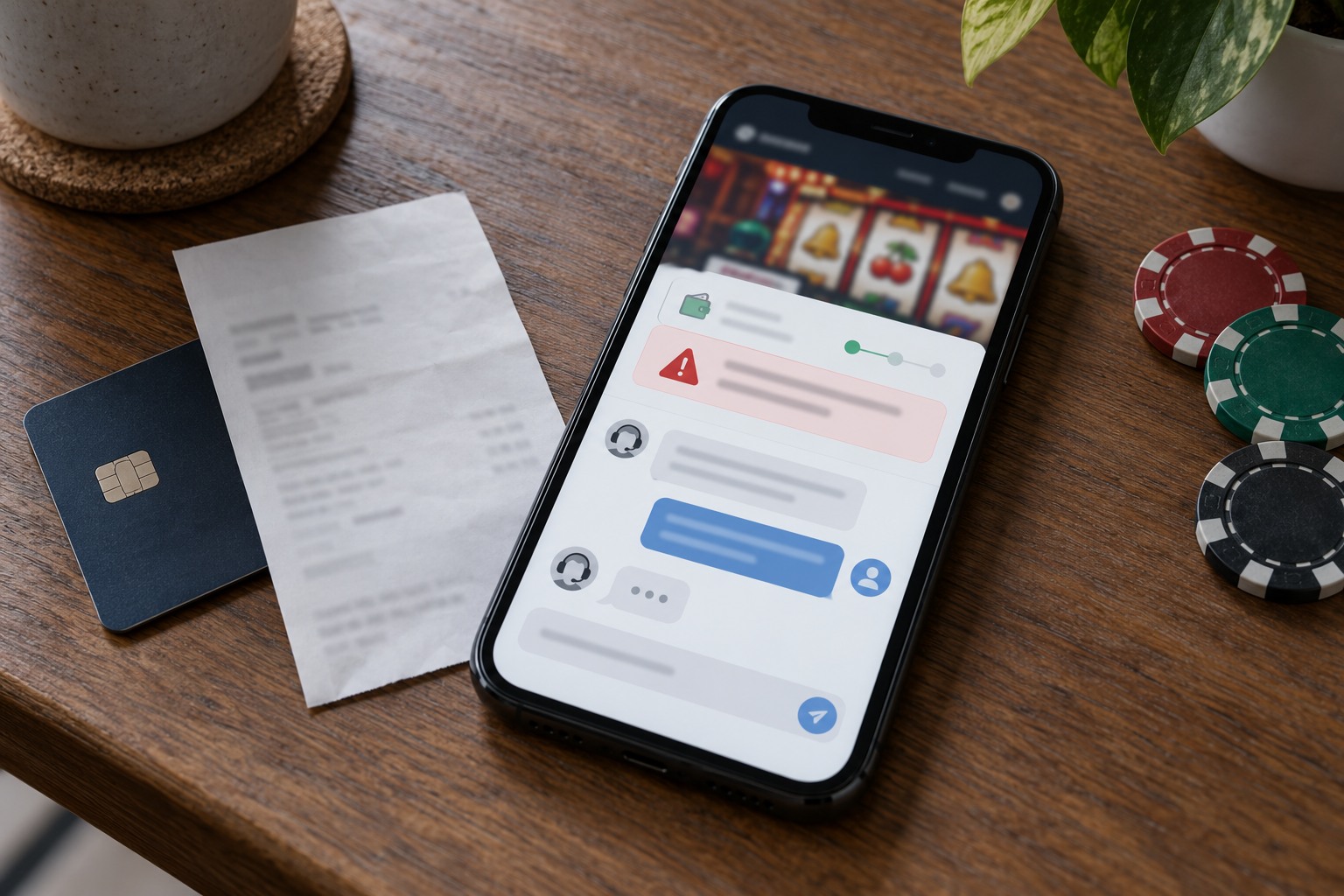
How a typical fraud attempt unfolds
- Attraction: a post, advert, search result or private message promises a large bonus, guaranteed return or exclusive access.
- Trust: the page copies an established casino’s brand, licence badge, support script or account screen.
- Access: the victim is asked to sign in through a link, share a one-time code or install a “verification” app.
- Payment: card details, a bank transfer, cryptocurrency or a remote-access session is used to take money or credentials.
- Pressure: the fraudster invents a deadline, tax, compliance hold or release charge to secure another payment.
Not every delay or bonus condition is a scam. The warning sign is a request that changes the agreed process, bypasses the official account or sends money to a person or wallet that cannot be matched to the named operator. A legitimate verification request should be connected to the account’s written procedure and handled through the operator’s verified site.
Cloned casino websites and fake licence badges
A cloned site copies the colours, game tiles and menu labels of a real brand. The attacker changes one character in the web address or uses a different domain ending. HTTPS and a padlock show that the connection is encrypted; neither proves that the page belongs to the operator shown on screen.
Check the full browser address before entering a password or payment detail. A badge saying “NZ approved” does not establish a licence unless the claim matches a current DIA record. The licence-check article covers the company, brand and domain comparison; the scam signal here is a badge that sends people to a lookalike site or cannot be traced to the official register.
Look carefully at links in search advertisements and social posts. An ad can use the right brand name while pointing to a third party. If a familiar casino suddenly uses a new domain, asks for a password reset or announces a “security migration,” open the address independently through a known route before acting.
Impersonated support and one-time-code theft
Fraudsters contact people through direct messages, email, live chat pop-ups or telephone calls and pose as casino staff. They may know a username, recent transaction amount or a public complaint, which makes the approach feel connected to a real account. That detail does not authenticate the sender.
A support agent should not need these items
- Your account password or email password.
- A one-time code, authenticator code or recovery code.
- Your full card security code or banking login.
- Remote control of your phone or computer.
- A transfer to a personal account to “prove ownership.”
End the conversation and reopen support from the verified account page or official domain. Never follow the caller’s link to “confirm” the identity of the caller. If a code has already been shared, secure the email account first, then the casino account and any linked payment accounts. Contact the bank through a published phone number if a transaction or card detail may be exposed.
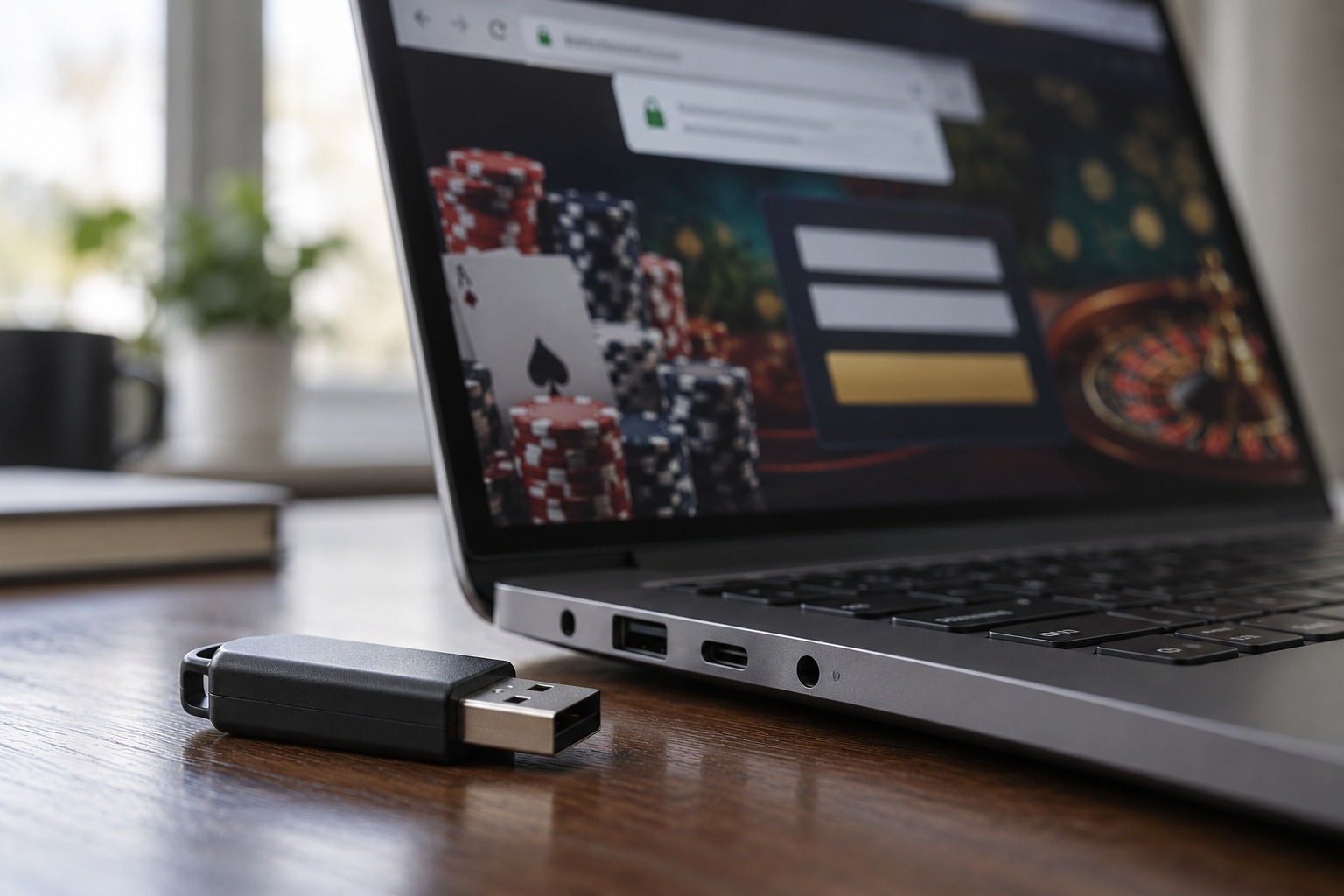
Protect the computer used to access an account
A fake support message may ask you to install a “verification” app, browser extension, security update or remote-access tool. These downloads can contain malware that steals saved passwords, browser session cookies or banking details. Do not install software from a chat link, pop-up or advert; use the official app store or the software publisher’s own website. A request to disable security software or grant remote control is a reason to stop and verify the contact independently. The NCSC’s malware guidance describes similar fake-support and malicious-download tactics in New Zealand.
A firewall and antivirus software do different jobs. A firewall controls network connections to and from a device; it can reduce unwanted access, but it does not scan every downloaded file or prove that a casino website is genuine. Antivirus or anti-malware software scans files and apps for malicious behaviour and can block or quarantine known threats. Keep the firewall and one up-to-date real-time anti-malware tool enabled. Many devices already include these protections, so a paid security package is not automatically required. Running multiple real-time antivirus products can cause conflicts; choose one, keep it updated and use its scan tools when needed.
Top five antivirus options for Windows PCs
This shortlist uses the latest Windows home-user results available in October 2026 from AV-TEST’s August 2026 test and AV-Comparatives’ September 2026 malware test. The order is a practical ranking, not a guarantee: the labs test malware protection and related factors, not whether a casino operator is trustworthy.
| Rank | Antivirus | Plan | Latest lab results |
|---|---|---|---|
| 01 |  Bitdefender Total SecurityTop pick |
Paid suite | 18/18 · AV-TESTAdvanced+ · AV-Comparatives, Sep 2026 |
| 02 |  ESET Security Ultimate |
Paid suite | 18/18 · AV-TESTESET HOME Security Essential: Advanced+ · AV-Comparatives |
| 03 |  Norton 360 |
Paid suite | 18/18 · AV-TESTAugust 2026 |
| 04 |  Avast Free Antivirus |
Free | 18/18 · AV-TESTAugust 2026 |
| 05 |  Microsoft Defender Antivirus |
In Windows | 17.5/18 · AV-TEST6/6 for protection · August 2026 |
Tested product editions and features can differ from local subscriptions. Compare what a plan includes before paying. This ranking is for Windows PCs; Mac users should choose a product tested for macOS or rely on macOS’s built-in protections.
Keep the operating system, browser and security software updated as well. If a download or device warning seems suspicious, stop entering account details and run a scan using your device’s trusted security app. If you may have installed malware or shared a login, use a separate trusted device to secure the email and casino accounts and contact your bank through its verified app or published number. For the account and device checks to use before choosing an operator, see Protect the device used to sign in.
Withdrawal-release fees and fake tax demands
A message claims winnings are ready but require an extra deposit for tax, insurance, anti-money-laundering clearance, wallet activation or a special transfer certificate. The payment is directed to cryptocurrency, a personal bank account, gift cards or a payment app unrelated to the casino’s cashier. A second charge may follow the first, with another reason given when the first one is paid.
Do not treat a demand as genuine because it contains a case number or a copy of the casino logo. Compare it with the withdrawal terms opened from the verified account. A fee routed to a stranger’s bank account or wallet is a different transaction from a charge disclosed in the cashier by the named operator; verify any explanation through a separate official channel.
Taxes and legal duties depend on the relevant jurisdiction and personal circumstances. A person posing as support cannot settle that question through a private wallet transfer. Preserve the written request and ask the actual operator through a separately verified channel which clause authorises the charge. Do not send more money while the payment route and legal basis remain unclear.
Bonus terms that obscure the cash balance
A bonus is not automatically fraud. When the headline stands out and the rules are hard to find, the offer’s costs and conditions are easier to miss. Check the playthrough amount, eligible games, time limit, maximum stake, maximum withdrawal and treatment of winnings before accepting. Confirm whether the balance display distinguishes withdrawable cash from bonus funds.
Watch for terms that change after a deposit, a bonus that activates without a clear choice, or a “no wagering” claim that conflicts with the account conditions. Save the offer page and its full terms at the time it is accepted. A screenshot of the promotional banner alone does not show the restrictions that may decide a withdrawal dispute.
Do not follow an offer from an influencer or affiliate straight to a payment form. Open the casino’s official domain independently, check whether the brand and operator match its local status, and compare the promotion terms there. A referral code does not provide an extra layer of consumer protection.
Recovery scams target people after the first loss
After a person reports a scam or posts about a blocked withdrawal, another account appears claiming to be a lawyer, regulator, tracing specialist or compensation service. It promises to recover the money for an upfront fee, requests more identification documents or asks for a wallet seed phrase. A fraudster may reuse details from the first incident to sound credible.
Check any professional or regulator through the relevant organisation’s own directory, reached independently. A genuine recovery process does not require a stranger to take control of a bank login or crypto wallet. Do not pay someone who guarantees a refund, demands secrecy or says a small fee must be paid before a large recovery can be released.
Keep the original incident separate from later contact. Save sender addresses and phone numbers, but do not keep replying to test the story. A report to the bank or an official consumer-support service should be made through a published channel rather than through an account that contacted you first.
Message patterns that deserve a pause
| Message or event | Risk marker | Safer response |
|---|---|---|
| “Your account closes in 15 minutes unless you verify.” | Artificial urgency paired with a login link. | Open the account from a saved address and check for a matching notice. |
| “Send your code so we can release the funds.” | Requests a code that can authorise account access or a sensitive change. | Do not share it; end the contact and report the attempt through verified support. |
| “Your bonus guarantees a daily return.” | A promise of profit from a game with uncertain outcomes. | Do not deposit on the strength of a guaranteed-return claim. |
| “Pay the tax to this wallet; the casino cannot deduct it.” | Upfront payment to an unrelated person or cryptocurrency address. | Check the written terms and get independent tax advice if needed. |
| “We found your money; pay our recovery fee.” | Unsolicited recovery offer after a known loss. | Verify the organisation independently and refuse wallet or password access. |
If a payment or account detail has been exposed
Tell the bank or card issuer through a published channel that the payment may be linked to a scam. Give the transaction reference and ask which security or dispute route applies; a reversal is not guaranteed. Keep the scam response focused on the account and evidence, while the payment-method article explains chargeback limits by payment type.
- Stop responding to the person or page that made the suspicious request.
- Notify the bank through the number on the card or an official website or app.
- Change reused passwords, beginning with the email account that receives resets.
- Turn on multi-factor authentication, sign out other sessions and check recovery details.
- Save transaction records, URLs, emails, chat exports, phone numbers and timestamps.
- Report the incident to the relevant New Zealand support service and follow its current reporting instructions.
The New Zealand Consumer Protection scam guidance lists current reporting routes. Preserve evidence before deleting messages or resetting a device that may contain important account records.
Keep a compact incident record
Write one timeline that separates what you know from what the sender claimed. Include when the message arrived, the domain or profile used, the account involved, what information was shared and each payment reference. Record the name of every bank or platform representative, the case number and any promised follow-up date.
Do not upload the same identity document to a second “recovery” site. If a real operator needs identity verification, use the authenticated account route after checking the domain, then ask what document is required and why. If the request came from an unverified person, store the file securely and do not forward it as proof.
A small record helps a bank, platform or support team distinguish a fake casino from an impersonation of a genuine casino. That difference changes which accounts, domains and payment recipients need to be secured.